Most restaurant owners focus on what customers see: ambience, service, and plating. Yet the real operational pressure sits in the back of house, where small inefficiencies add up quickly and directly impact margins.
Issues such as missed reservations, delayed orders, inventory gaps, and staff misalignment are rarely isolated problems, they are often the result of fragmented systems and manual processes that cannot keep up with the pace of a modern restaurant.
What Back of House Management Really Involves
Back-of-house (BOH) management extends far beyond the kitchen. It covers the full operational backbone of your restaurant, including reservations, table allocation, kitchen coordination, inventory control, menu management, staff scheduling, and payment reconciliation.
When these functions operate in silos, chaos become inevitable. Orders get delayed; reservations overlap, and financial tracking becomes inconsistent, affecting overall restaurant performance.
Problems of running your restaurant with fragmented systems
Most restaurants have existing systems for running their day-to-day operations, but the major problem is lack of integration. You find orders coming through phone calls, WhatsApp and other third-party platforms such as UberEats, Glovo and Bolt food then payments are handled separately and delivery logistics through another system. With such systems, teams are forced to manually reconcile information across multiple touchpoints at the end of the day. This fragmentation creates gaps in visibility and increases the likelihood of errors.
5 Practical Ways to Strengthen Your Restaurant’s Back of House
Handling reservations across multiple channels without a unified system leads to inconsistencies and lost opportunities. A centralised platform ensures that all bookings, regardless of source, are captured in one place and reflected in real time. This allows your team to manage table availability accurately, reduce double bookings, and maintain a consistent view of operations across all channels.
Manual workflows slow down operations and introduce avoidable errors, especially during peak hours. Re-entering orders, updating spreadsheets, and reconciling transactions manually not only consumes time but also increases operational risk. Automating these processes improves efficiency at scale and allows your staff to focus on execution rather than administration.
Operational consistency depends on real-time data alignment. When your reservation system, kitchen workflows, and payment processes are connected, information flows seamlessly across the business. Availability updates automatically, orders move directly to the kitchen, and payments are accurately tied to reservations. This level of coordination reduces confusion and improves overall service reliability.
Strong operations are built on insight, not guesswork. Access to reservation patterns, peak hours, and customer preferences enables better planning across staffing, inventory, and service delivery. With the right data, restaurants can anticipate demand, allocate resources effectively, and continuously refine their operations based on actual performance.
No-shows and last-minute cancellations create immediate revenue loss and disrupt planning. Introducing deposits or prepayments helps secure bookings and improves financial predictability. When implemented seamlessly, this approach strengthens commitment without adding friction to the customer experience.
Where Reserveport for restaurants Fits In
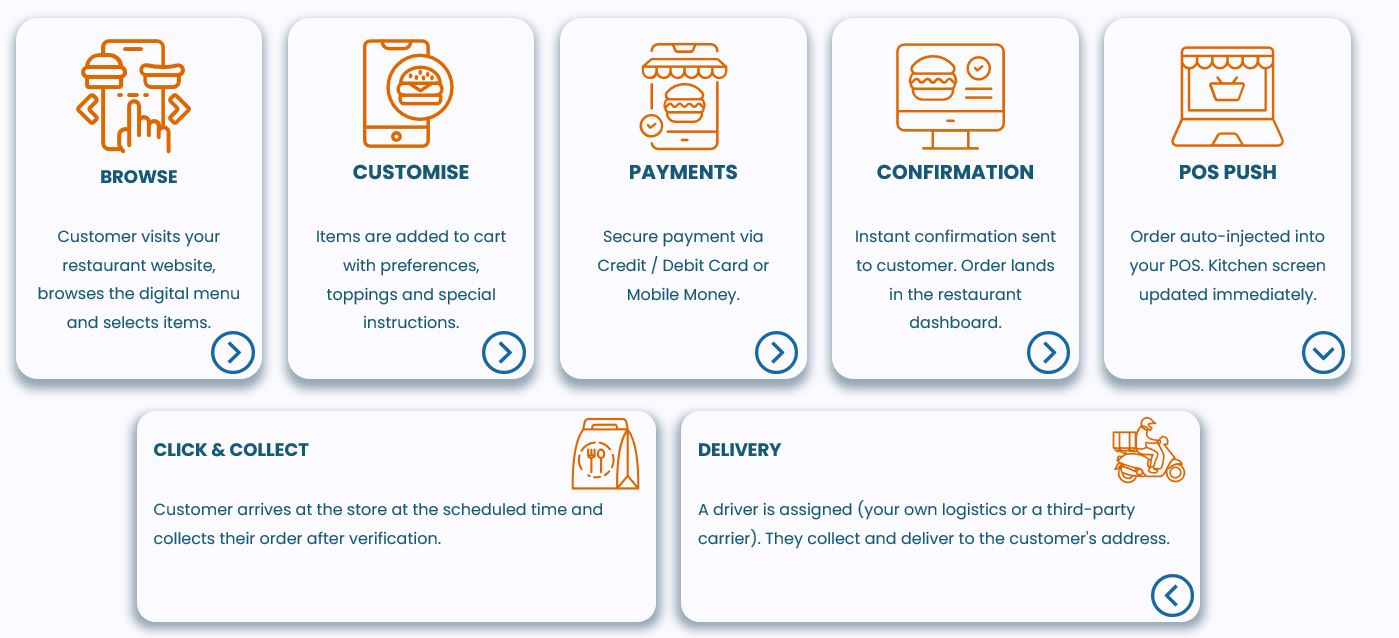
Reserveport for restaurants is a Pesapal-powered online food ordering platform and channel manager designed to address challenges in menu management and the manual posting of orders to POS systems by waitstaff. This digital system allows customers to order food from restaurants, cafes, or other food establishments via the internet. Reserveport for restaurants provides a convenient way for users to browse menus, select dishes, customize orders, and make payments from their devices.
Reserveport for restaurants enhances convenience for both customers and restaurants by making the food ordering process efficient and accessible. It allows businesses to accept and manage orders placed online for delivery or takeaway and streamline operations, and boosts revenue for restaurants and food businesses.
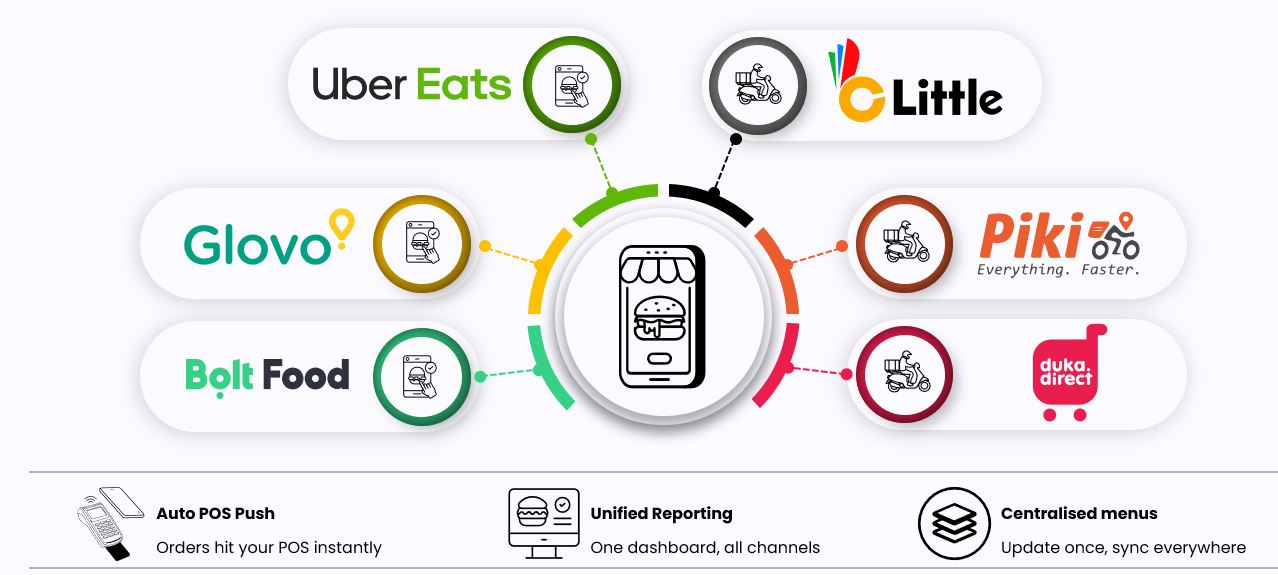
Additionally, it acts as a channel manager by centralizing and managing orders from multiple online sales channels, including the restaurant’s website, mobile app, and third-party delivery platforms such as Uber Eats and Glovo.
How online ordering via Reserveport for restaurants works
How third-party delivery platforms work via Reserveport
Reserveport for restaurants acts as a channel manager by centralizing and managing orders from multiple online sales channels, including the restaurant’s website, mobile app, and third-party delivery platforms such as Uber Eats and Glovo.
Reserveport for restaurants brings every ordering channel into a single, unified operation.
Why Reserveport for restaurants